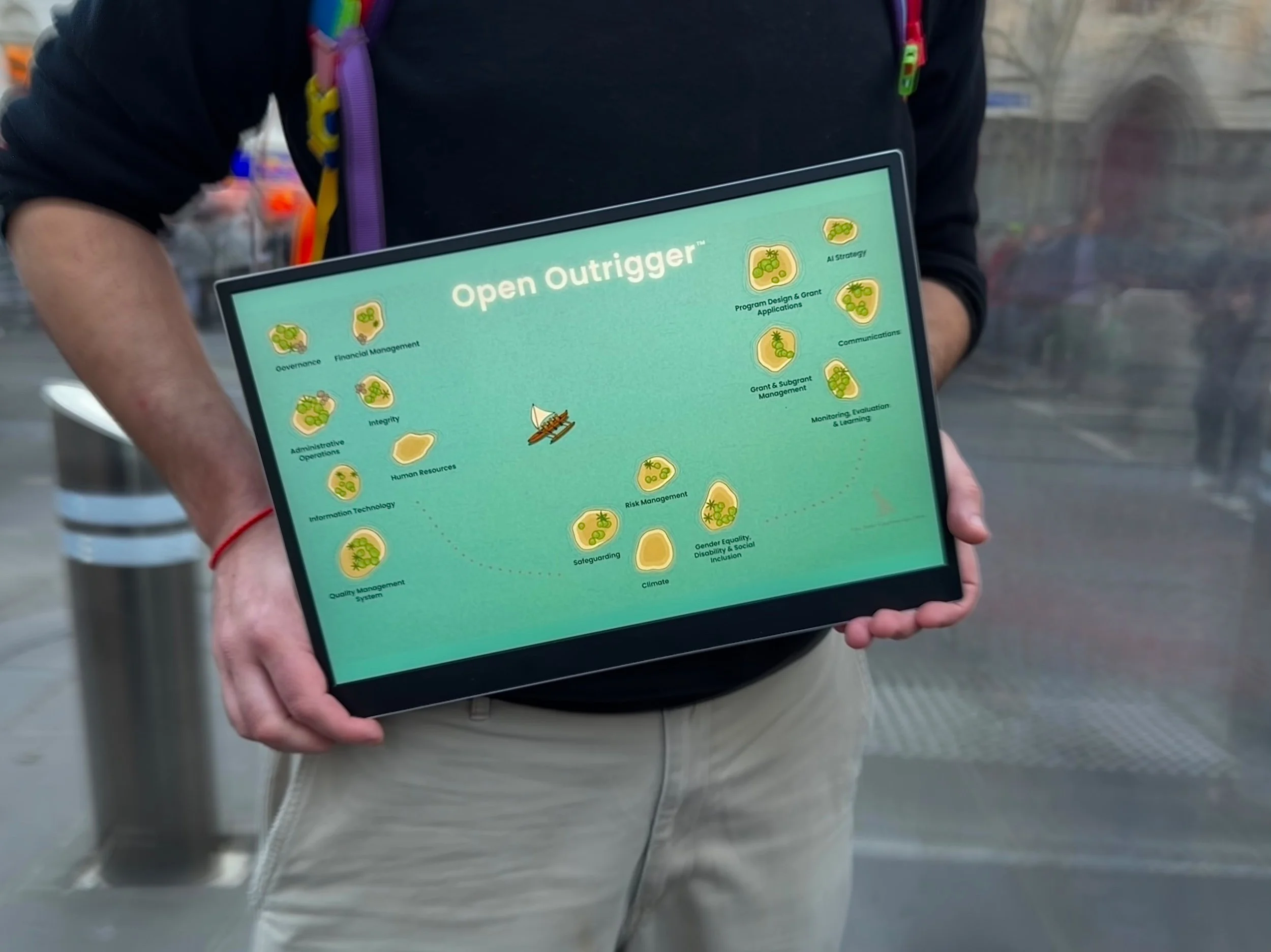
Open Outrigger
Built for local organisations. Standards-mapped, expert-anchored and permanently free.
Open Outrigger is a free and open-source AI-enabled platform under development. It is designed to work inside the AI apps organisations already use.
Through structured dialogue between staff and an AI, it will guide NGOs and locally led organisations through developing a complete set of organisational frameworks, from governance to safeguarding to monitoring and evaluation.
The result is not a collection of documents. It is living systems the organisation understands, owns, maintains and keeps using with its own AI tools.
The design reflects World Bank's Small AI framing of practical, affordable AI designed for real-world constraints.
What is Open Outrigger?
Features
What sets Open Outrigger apart
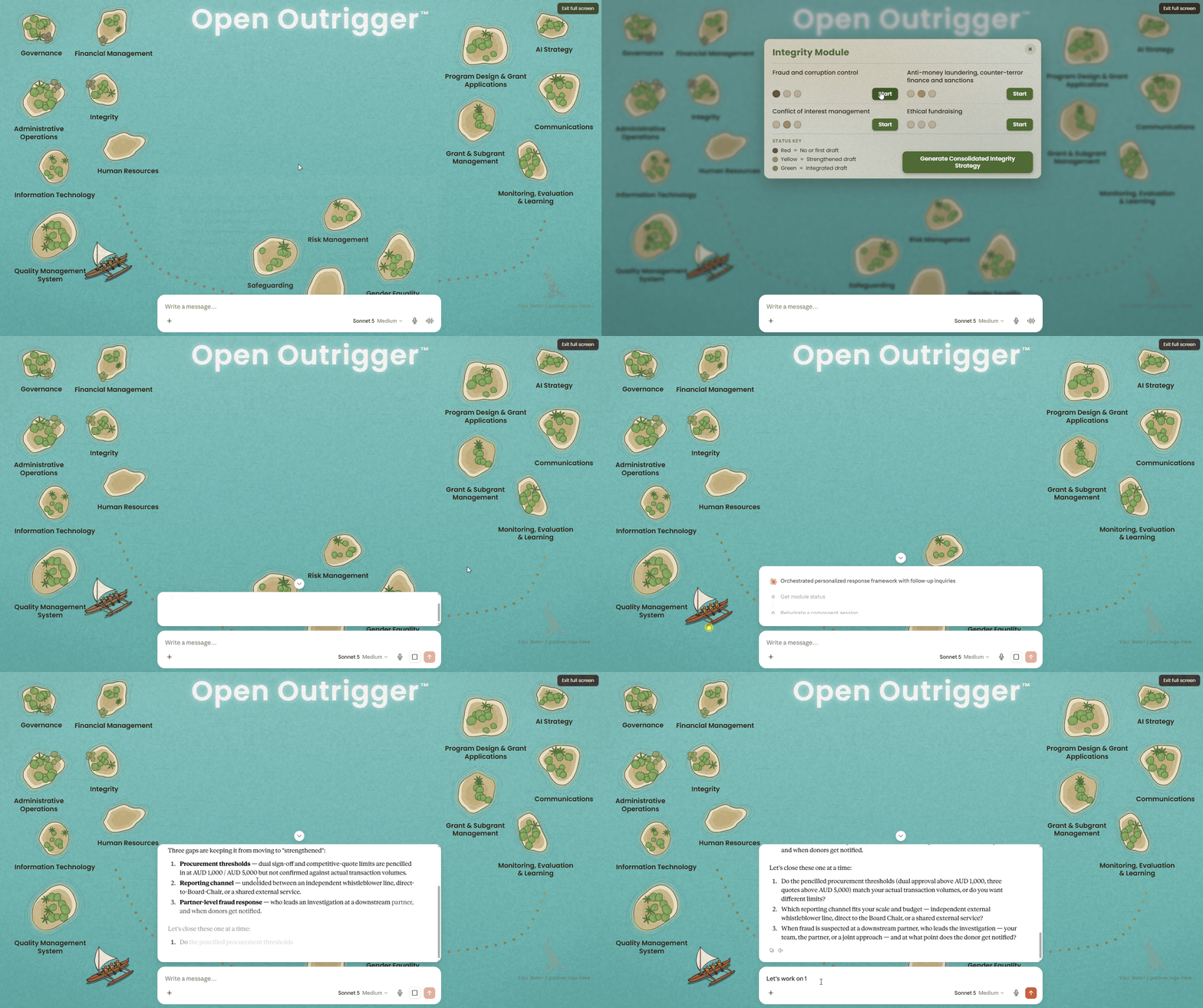
Each module is designed to guide the AI to hold core standards steady while drawing out the organisation's own requirements and context through structured conversations. Every conversation is built on a curated baseline validated by experts. Organisations work from proven standards while working backwards from their real operational problems, not forwards from a compliance checklist. As the system builds its understanding of how the organisation functions, it will surface the structural roots of persistent problems.
Structured, problem-driven conversations between staff and AI
Open Outrigger produces documents, but that is not its primary purpose. It ensures staff build judgement and skills as they develop each framework. The AI works alongside staff, never producing content for passive acceptance. This is what sets Open Outrigger apart from AI document generation tools.
Capacity first, documents second
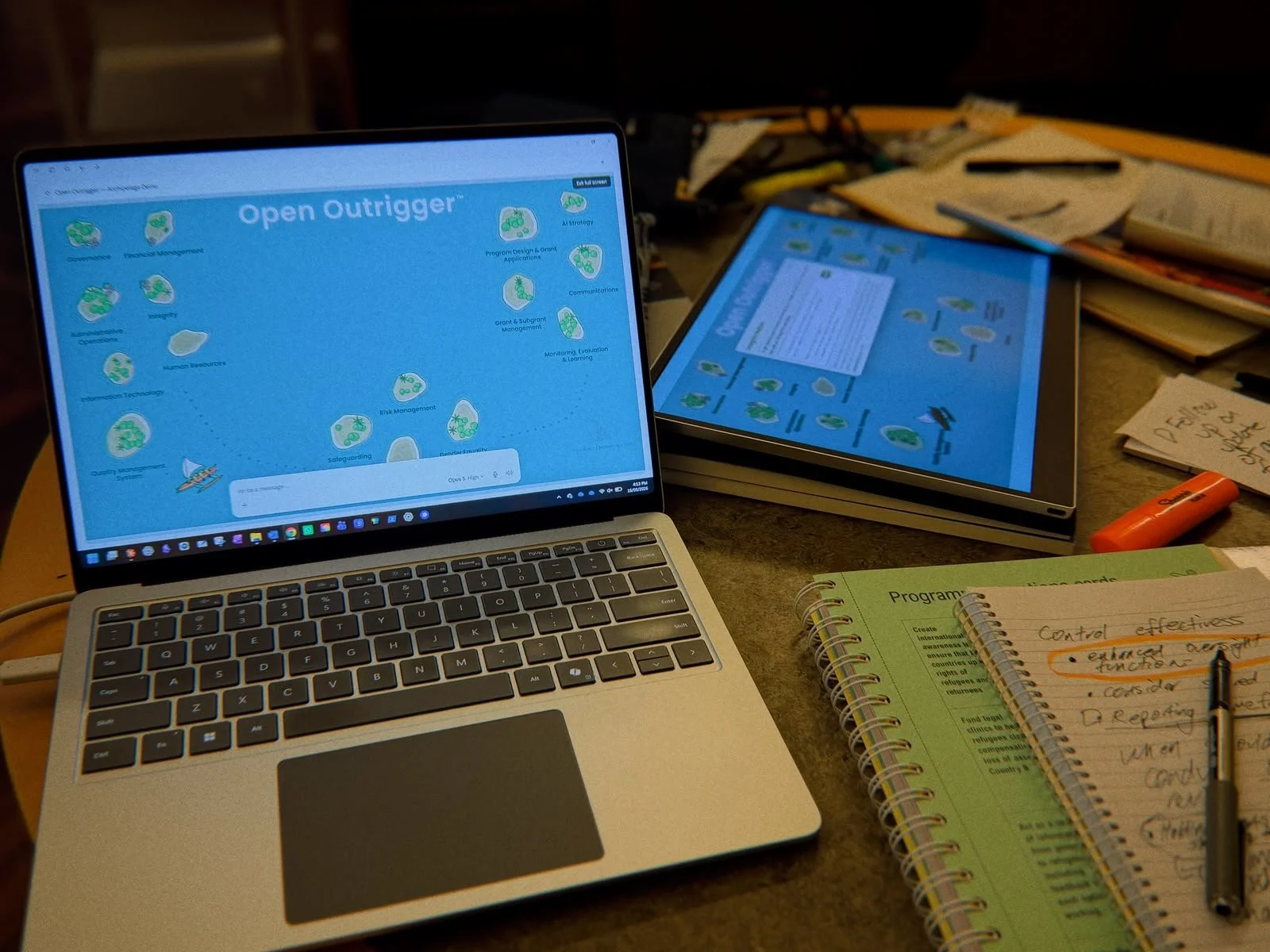
Rather than one-off chats, Open Outrigger's iterative process builds the AI's understanding of the organisation through a structured context library. That library lives on the organisation's own systems, not ours. It protects the organisation's privacy, keeps its knowledge out of products that would create dependency and leaves it free to use the library with whichever AI tools it chooses.
A context-builder for AI

More than 434 working relationships between components will be built into Open Outrigger's baselines. The system will be attuned to these linkages, building toward a coherent institutional whole where policies, procedures and strategies are grounded in operational reality. The voyage also builds staff understanding of the linkages through explainers and visual tools. A fraud and corruption control framework, for example, is developed in relationship with 16 other components, resolving contradictions and strengthening effectiveness.
Nothing developed in isolation

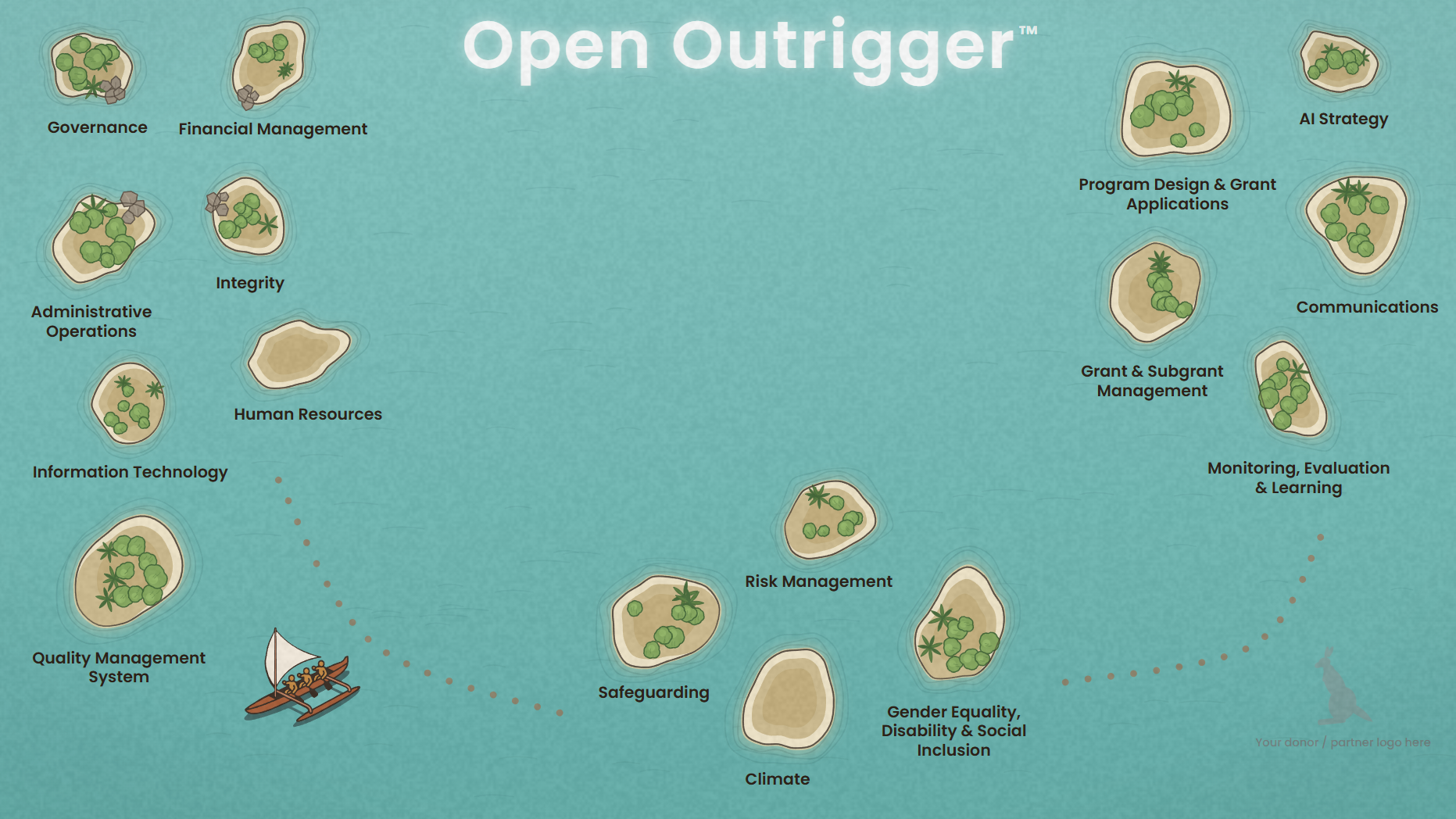
Open Outrigger is designed for time-poor staff in under-resourced organisations, with clear stages that fit around real workloads and plain-English framing tested across cultures. Visual tools such as the Open Outrigger map will show organisations where they are on the voyage.
Accessible user experience

Open Outrigger will be permanently free. Its pre-built structure keeps AI running costs low, and organisations use whichever AI model they can access and afford. Because it is open source and built on plain markdown files, nothing is locked to the platform. Organisations can adapt, extend and integrate their knowledge base with a wide range of AI tools, sparing them costly proprietary lock-in.
Free and customisable