We cannot claim locally led development while planning an AI future that leaves local organisations to figure it out alone.
Partners are how The Outrigger Project will build reach, quality, innovation and sustainability. The Open Outrigger platform will only work if it is built with the region rather than for it. During our establishment phase we are seeking partners across each of the areas below.
Our partnership approach
Building capability should not mean imposing external frameworks on local organisations. Open Outrigger will be co-designed and road-tested with organisations across multiple countries, shaping module content and how concepts translate for speakers of English as a second language. Cohorts will deliberately include organisations led by women, people with disability and Indigenous Peoples, and partners will hold visible ownership of what they helped build. We will resource co-design properly.
We will also build a community of practice, Outrigger Crew, for practitioners already using AI in organisational strengthening. It will offer a moderated discussion space, a newsletter and webinar series, in-person events and training. It is also where we will properly acknowledge the contributions of co-designers. If you would like to be involved from the start, register your interest on the contact page.
The fastest route to the local organisations Open Outrigger serves is through the programs and networks already working alongside them.
Regional and national NGO coordination bodies are our entry point to co-design partners and ground our baselines in the region's own standards.
Existing Australian grant and volunteer programs can support organisations to use Open Outrigger. Australian NGOs can also introduce it to their local partners.
Alumni networks can connect Open Outrigger to NGO leaders across the region.
We will only seek partners to expand reach once field testing has shown Open Outrigger works.
Partnerships for localisation and reach
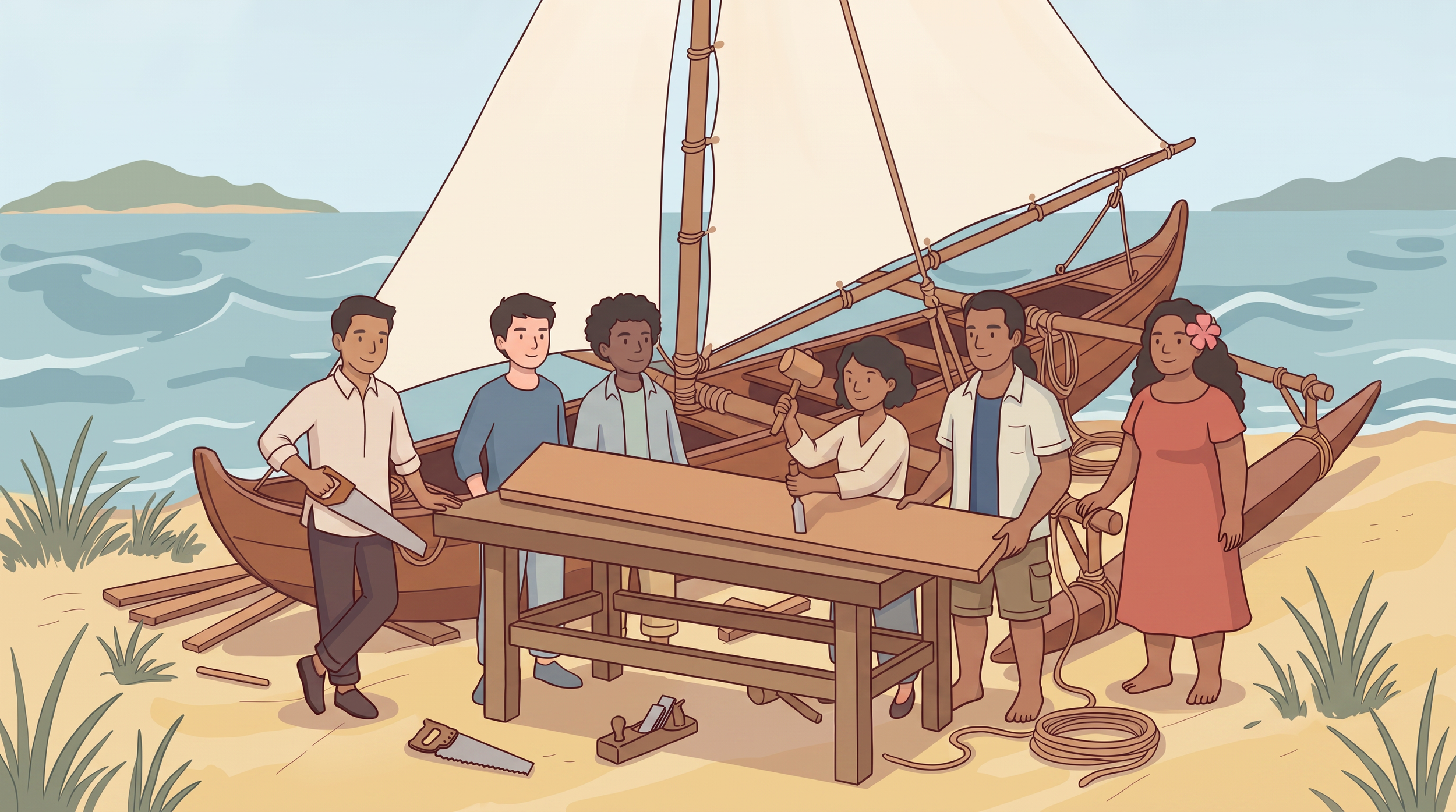
Open Outrigger is only as good as the standards it draws on, and the people who set them. These are the thematic experts, peak bodies and institutions behind the guidance each module is built from. We will engage them as baseline developers, reviewers and validators. No module will reach beta testing without expert review.
We respect intellectual property. We will never draw on material we are not permitted to use, and every component and module will carry full attribution of the content it draws on, published in our public baseline library.
The evidence base for AI-enabled organisational strengthening barely exists. We will measure and publish our own results and are seeking research and policy partners to build that evidence with us.
Partnerships for standards, research and policy
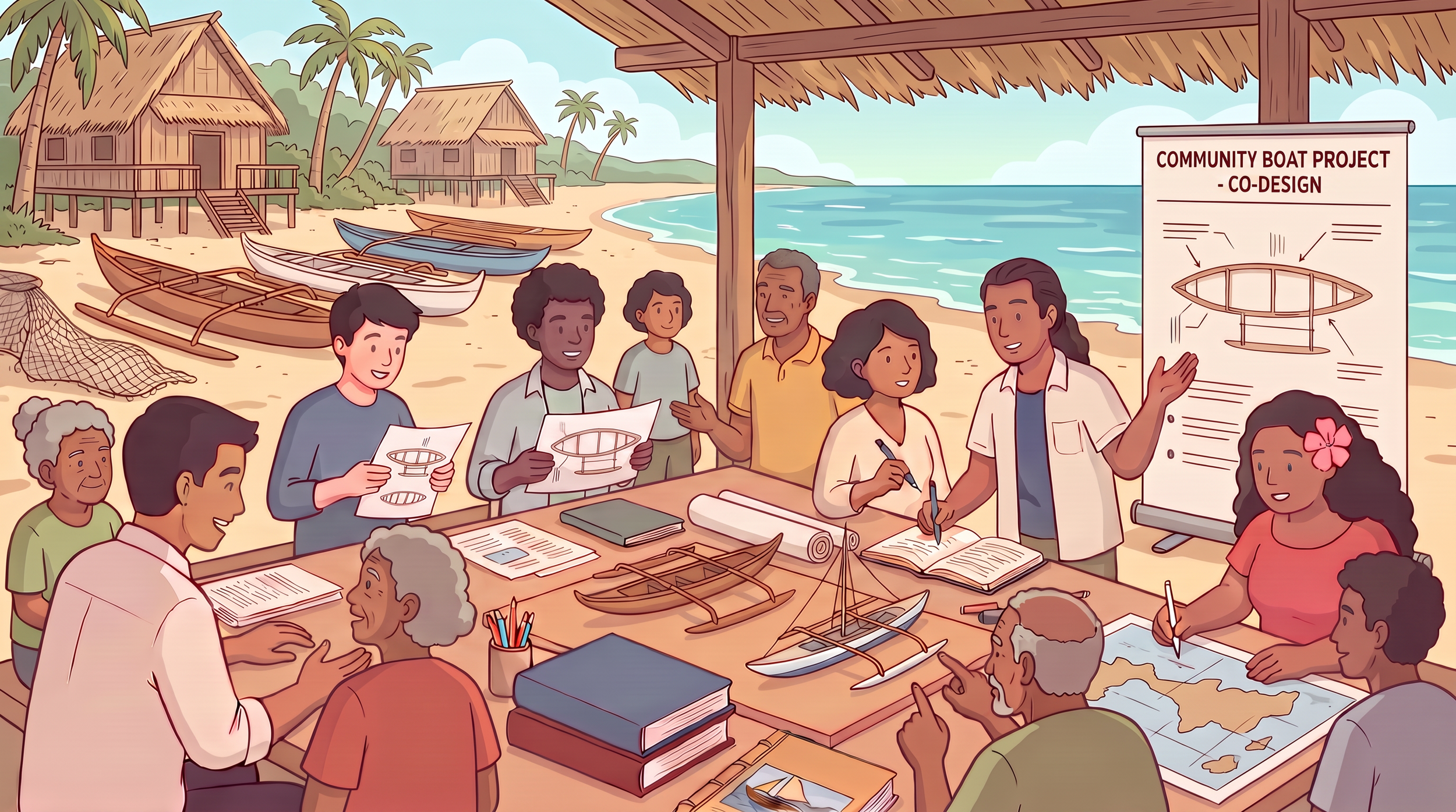
The AI-for-development space is converging from two directions. Development actors are adopting AI and AI companies are learning about development. We are looking for partners across both, along with dev tech peers building digital public goods for the region. We want to integrate with your work rather than duplicate it.
AI tools work better inside organisations that hold structured context and coherent frameworks and users who understand how their organisation operates apply those tools with better judgement. That makes Open Outrigger a complementary platform, not a competing one.
Integration will happen on open terms. Adjacent tools will connect through openly published standards and respect the local-first architecture. No integration will give The Outrigger Project or any third-party access to an organisation's content.
Partnerships for innovation and integration

The core Open Outrigger platform and its baseline content will always be free and open-source for local organisations to use. Sustaining that free core is a design problem we take seriously. Building a quality, co-designed platform takes time and resources but we will not become grant-dependent or abandon our community when grant funding ends. Those with resources should fund priority work that is released free to all, so we are building a social enterprise model to sustain the platform, its community and its standards.
In practice that means development partners funding new modules and training, managing contractors and international NGOs purchasing enterprise licences for their partner networks and well-resourced organisations purchasing expert assurance of their Open Outrigger outputs.
When Open Outrigger's standards are trusted, we will step back from grant funding and use concessional finance to grow the revenue that sustains the free public good.
Partnerships for sustainability
The Outrigger Project is First Nations-owned and managed and First Nations approaches are a fundamental part of how we work and partner. We practise relational accountability and non-extractive engagement and respect data sovereignty and Indigenous Cultural and Intellectual Property (ICIP) rights. We will work closely with First Nations businesses and networks in the international development sector and pursue partnerships that connect First Nations Australians with Indigenous Peoples' organisations across the region.
First Nations engagement