
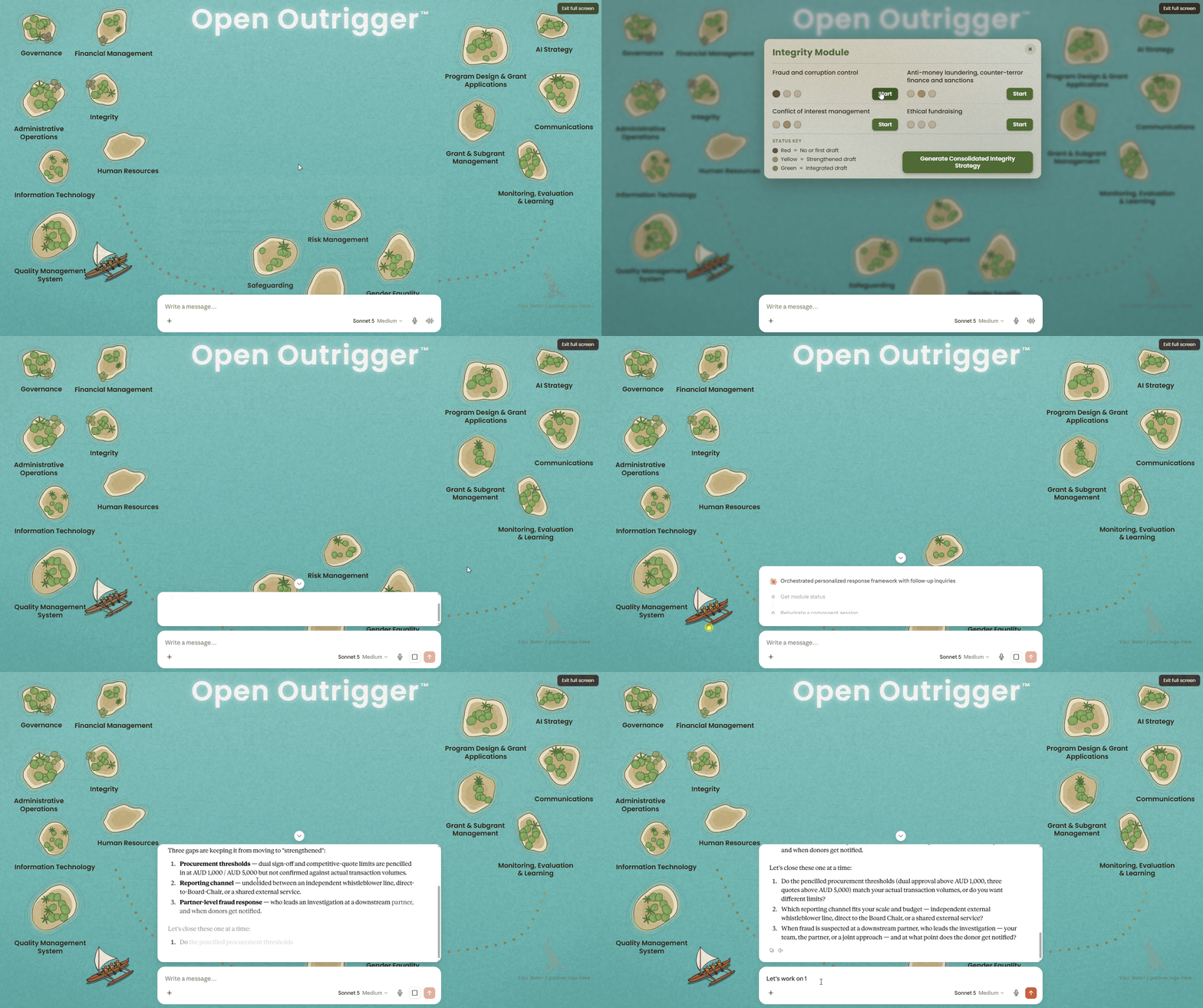
Open Outrigger
Built for local organisations. Standards-mapped, expert-anchored and permanently free.
How does it work?
Note: Open Outrigger is currently in development. This walkthrough describes Open Outrigger as it will work at release.
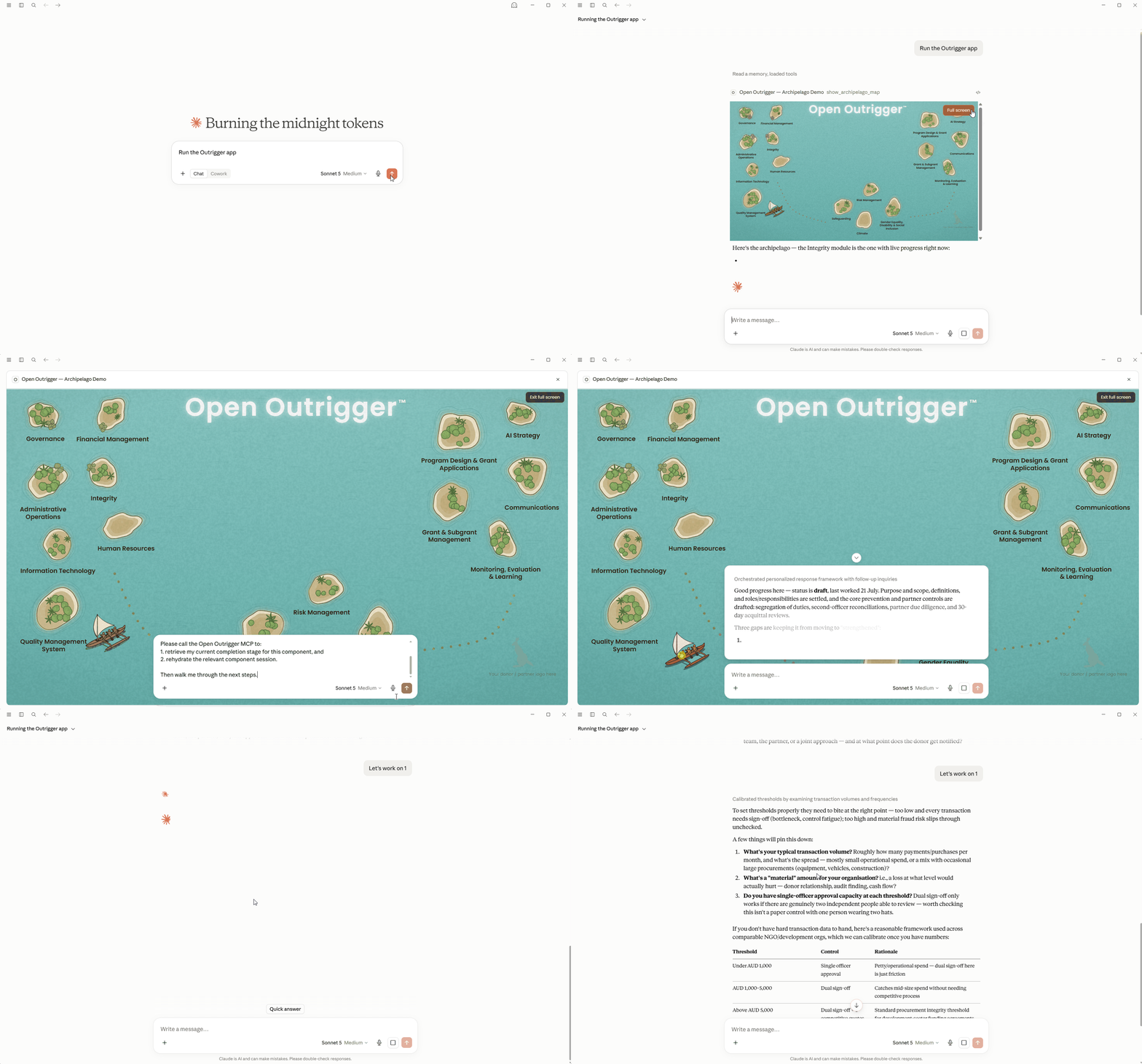
Connecting Open Outrigger takes a few simple steps in the AI app your organisation already uses (pictured, running on Claude Desktop).
Once connected, the AI sets up a structured library of folders and notes on your own computer. Throughout the voyage, your AI follows strict read and write instructions to build this organisational library as you go. By the end you will hold not just strong frameworks but a rich, structured context library on your own systems, ready for any AI tool to draw on.
Setup
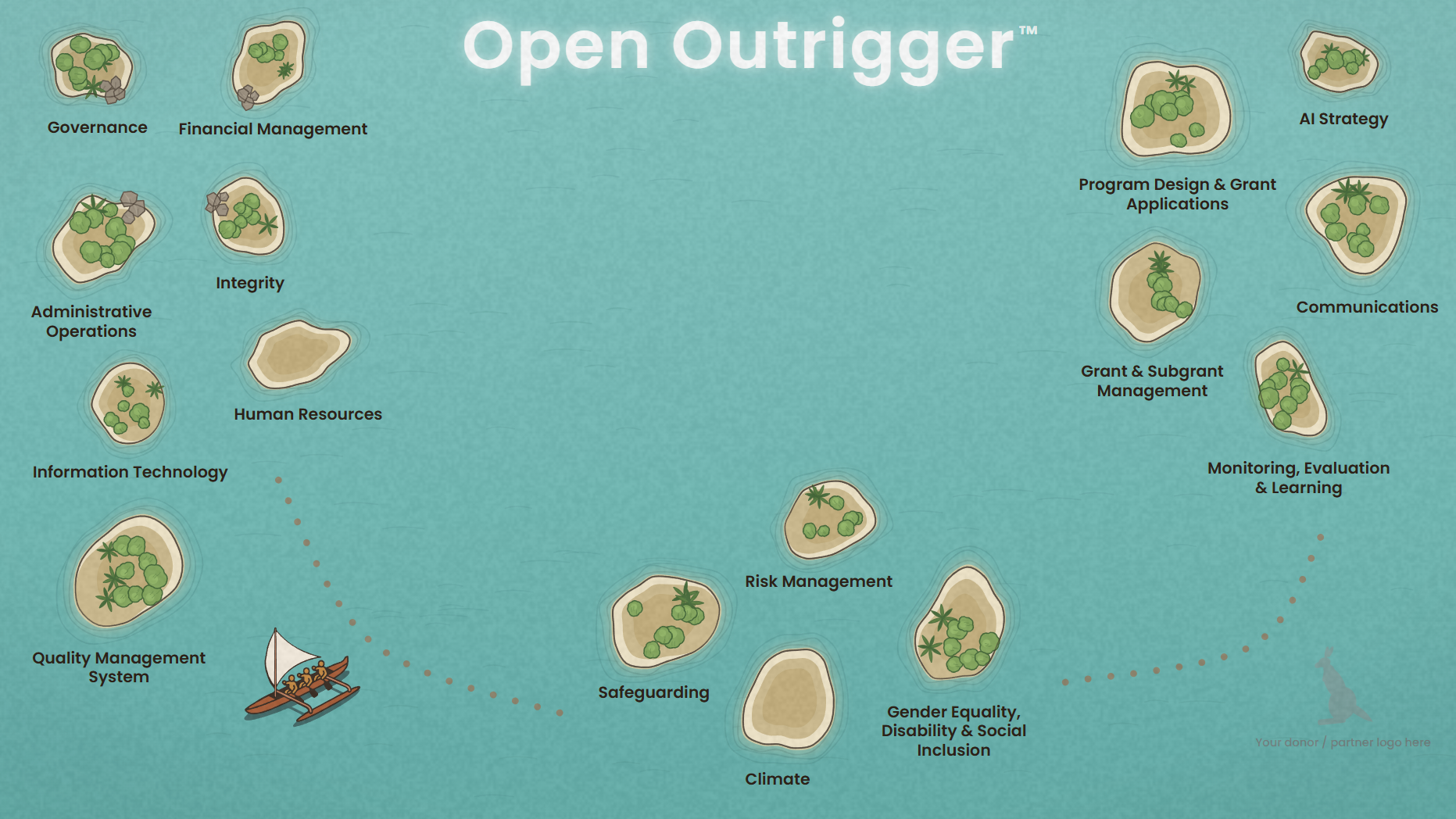
The Open Outrigger organisational strengthening voyage is laid out as a map. Seventeen module islands are arranged in three island groups:
Operational Module Group (left)
Cross-Cutting Module Group (middle)
Context-Intensive Module Group (right)
The voyage begins with the Operational Module Group.
The island map
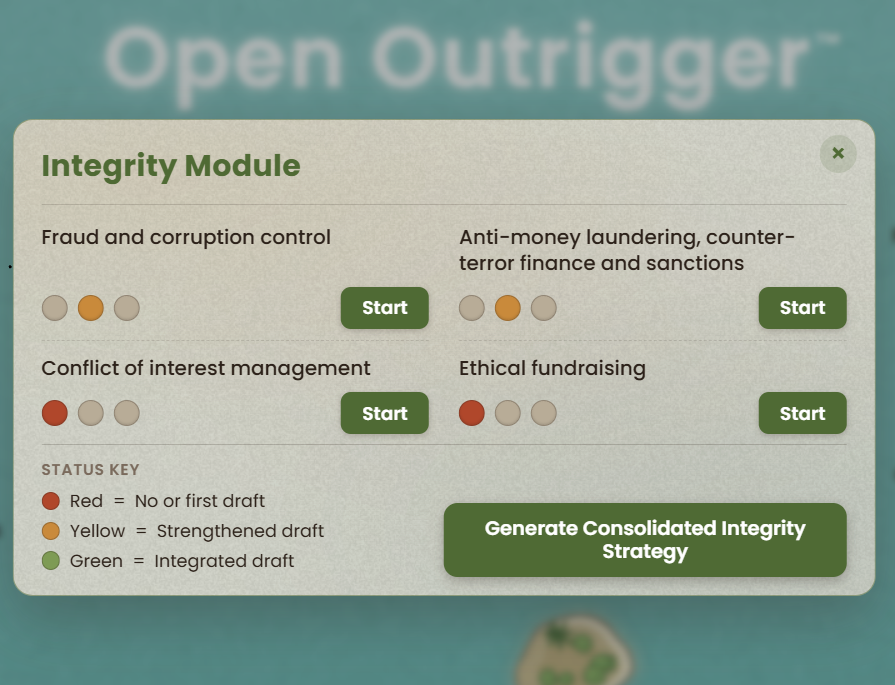
Each module island covers one organisational domain and is made up of components (pictured).
For each component, you start from scratch or bring in your organisation's existing draft. Either way, the component begins at 'No or first draft' status.
A structured conversation guides you through drafting, grounded in the module's expert-validated baseline. When drafting is complete, the component status moves to 'Strengthened draft'.
Once each component is strengthened, you develop a consolidated module draft that builds linkages and resolves contradictions between components. Each component is then marked as an 'Integrated draft'.
Modules and components
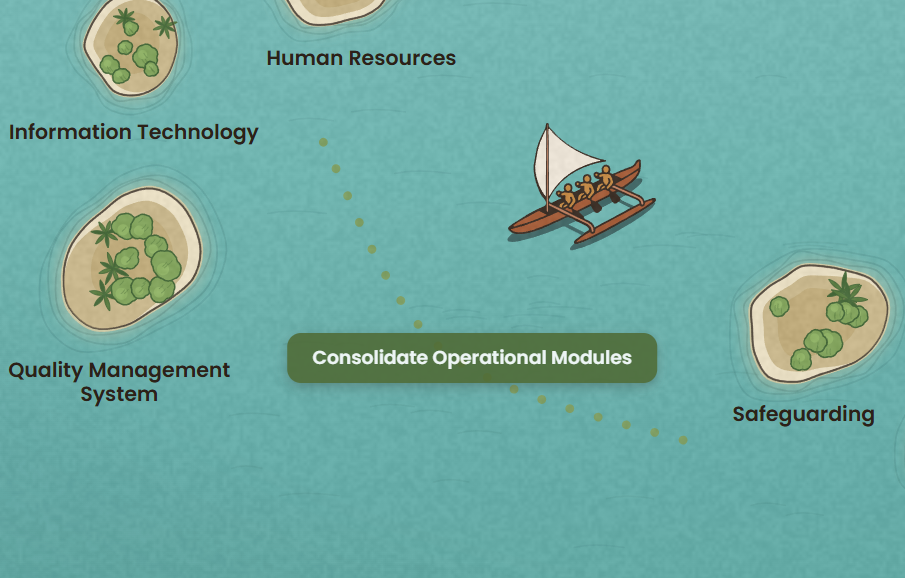
You repeat the same process for each module island in the group. Once every module is complete, you can consolidate the module group, cross-linking every module into one coherent set of integrated systems.
Once the Operational Module Group is consolidated, you can progress to the Cross-Cutting Module Group.
Consolidating Module Groups
Connecting the Module Groups
After consolidating the Cross-Cutting Module Group, you are ready for the Context-Intensive Module Group. Thanks to the structured library on your computer, the AI will not lose track of where you are up to. Everything you have developed becomes structured context for what follows.
Nothing in an organisation's systems stands alone. The map below shows the 17 modules broken into their 78 components, joined by more than 434 working relationships. Every dot is a component, and every line is a link Open Outrigger will help you build and keep consistent. Turn modules on and off to see how each depends on the others and see why a policy developed in isolation so often fails.
You now hold a powerful organisational context base for AI tools to operate on. In future, Open Outrigger aims to integrate tools that put this base to work, from developing staff training resources out of your context library to scheduled reviews that keep your modules current.